Urban areas cover 0.7% of the Great Barrier Reef catchment area and contribute 2% of the fine sediment load and 7% of dissolved inorganic nitrogen exports. A range of both structural measures (engineered; such as sediment control and upgrades to sewage treatment plants) and non-structural measures (such as policy, planning, regulation and compliance) in urban areas, can contribute to improving water quality but work best when applied as part of an integrated approach.
Water quality and the Great Barrier Reef
Poor water quality, which can be caused by elevated levels of fine sediments, nutrients and pesticides, has a detrimental impact on Great Barrier Reef ecosystems, particularly freshwater, estuarine, coastal and inshore marine ecosystems. These environments provide critical ecosystem services and have high tourism, aesthetic, cultural, recreational and economic values.
How do land-based activities affect water quality?
The Great Barrier Reef catchment area has been modified by changes in land use over time. These modifications affect the type and amount of materials that runoff from the land and enter our waterways.
Compared to pre-development conditions, the volume of river discharge and loads of pollutants (including sediments, nutrients and pesticides) have increased for most of the Great Barrier Reef catchment. For example, land use change has increased the amount of fine sediment and particulate nutrients that reaches the Great Barrier Reef by 1.4–5 times compared to pre-development conditions.
Land uses in the Great Barrier Reef catchments
How do urban areas contribute to overall pollutant loads?
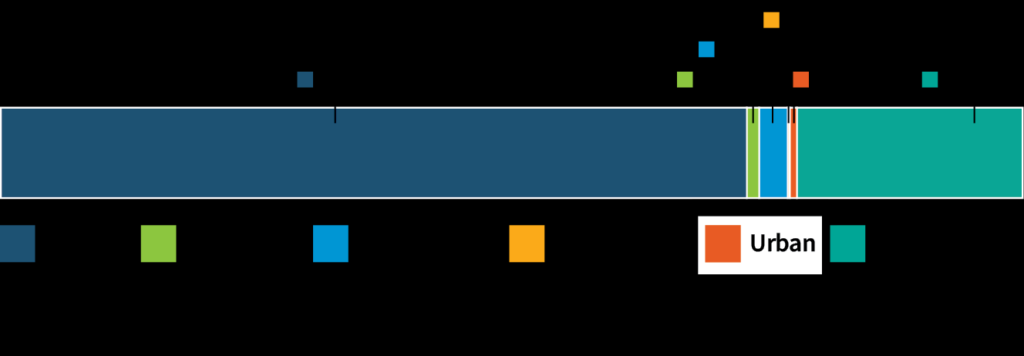
While urban land uses (including industrial, commercial, and residential activities) occupy a small proportion of the total catchment area (~0.7%), the intensity of use and large amounts of impervious surfaces results in high unit loading rates for nutrients and sediments in some locations. The primary sources are typically categorised into point sources such as sewage treatment plants and diffuse sources including stormwater runoff and erosion from cleared and developing areas.
Urban areas contribute 2% of the total fine sediment load, and 7% of total exports of dissolved inorganic nitrogen, from 0.7% of the Great Barrier Reef catchment area.
Urban areas can be large users of some pesticides, but their total area within the Great Barrier Reef catchment is relatively small. Other pollutants, such as persistent organic pollutants, plastics, pharmaceutical, veterinary, and personal health care products, and sunscreens, are also associated with urban areas.
Fine sediment and particulate nutrient loads by land use

Dissolved inorganic nitrogen loads by land use

Which areas are the dominant sources of key pollutants associated with urban development?
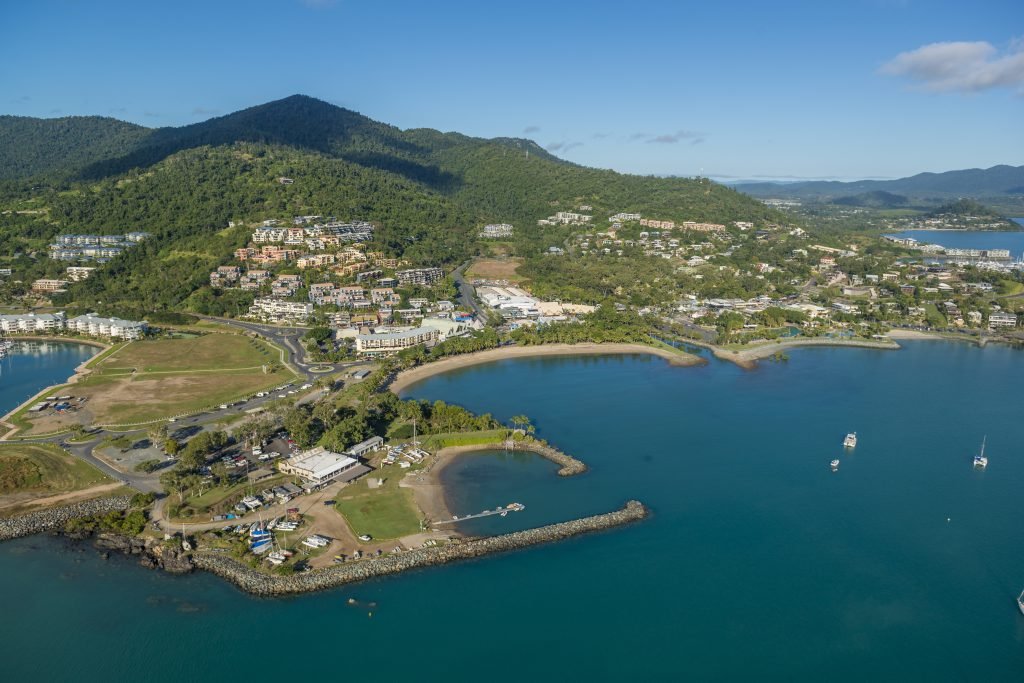
Coastal urban centres including Cairns, Townsville, Mackay, Rockhampton and Bundaberg can be important contributors to end-of-catchment pollutant loads, and significant contributors at local scales.
Drivers and transport pathways
The main drivers of pollutant exports in urban areas are

Surface disturbance (construction earthworks, unsealed roads), particularly in steeper and wetter areas

Land clearing and vegetation degradation
Increased areas of sealed surfaces that concentrate the runoff

Point source contribution through wastewaters
Management options
Fine sediment and particulate nutrients

Improving filtration (especially
through vegetation)

Reducing hydrological connectivity of sealed surfaces

Increasing zones runoff retention
times (related to the two above)

Combining treatments into treatment trains (a set of hydrologically linked treatments) is more effective than single treatments
Dissolved nutrients
Structural measures have considerable potential for removal of diffuse runoff nutrients and may also be important for management of wastewaters from urban areas. Structural measures include vegetation or biological components such as:

Constructed wetlands

Biofilters

Algal ponds

Riparian zones
Technological improvements show that membrane filtration and chemical addition are also likely to perform well
Pesticides

Non-structural measures such as policy, planning, regulation and compliance appear to work best when applied as part of an integrated approach, and recycling and reuse show considerable potential.
Potential ecosystem impacts
Nutrients, pesticides and sediments follow a cross-shelf gradient decreasing from inshore to offshore environments
Pesticides are harmful to aquatic species and can increase species vulnerability to other stressors, including heatwaves and reduced light
Sediments reduce the quantity and quality of light that can reach Great Barrier Reef ecosystems.
Increased sedimentation can negatively affect the abundance, diversity, spatial extent and recovery rates of inshore seagrass meadows and coral reefs and their associated communities including fish and dugong
Excess nutrients can
promote macroalgal growth which negatively affect corals, particularly through competition for space
be detrimental to coral health and increase coral
susceptibility to bleaching
cause phytoplankton blooms that can increase food supply for crown-of-thorns starfish larvae, possibly contributing to outbreaks
The impacts of other pollutants have not been well-studied in the Great Barrier Reef. Some pollutants have localised impacts (e.g. metals). Others that are found across the Great Barrier Reef (e.g. plastics) may have widespread impacts but need more research.